


Service
UI/UX consulting for AI-built products
Your team ships fast with AI coding tools. We standardise what gets built, align it with UX rules and tie it to a system that holds together as the product grows.
AI-assisted development, widely known as vibe coding, has changed how fast software teams ship. New screens and features appear faster than ever.
As speed goes up, the interface drifts: each screen uses a slightly different button, spacing and tone; empty, error and loading states get skipped; flows stop connecting. The product works, but it no longer feels like one product to its users.
Our job is to keep that speed while standardising what gets built, aligning it with UX rules and turning it into a system your team can carry forward. Your team keeps writing the code; we stand beside you as the team responsible for a consistent interface.

Before and after
The same screen twice: on the left, grown fast without shared rules; on the right, tied to one standard. Drag the handle.
While it drifts
- Three different buttons for the same job
- A different radius, spacing and type size on every card
- Status shown differently on every row
- One action under three names: View, Open, Details
- Heading and form fields on no shared scale
Once it follows a standard
- One primary and one secondary button component
- Radius, spacing and type size defined as tokens
- One status component, one meaning per colour
- One name everywhere: Open
- One type scale, form fields at one height
What we do in UI/UX consulting
UI/UX audit
We go through the product screen by screen and turn inconsistencies in components, type, colour and spacing, missing states and accessibility issues into a prioritised list.
Standardisation
Starting from your existing code, we bring colour, type and spacing tokens and reusable components into one standard.
Design rules for AI tools
We write the rule files your team's AI coding tools work from, so new screens follow the system from the start.
Designing new flows first
We design important features with their flows and states before development starts, giving your team a clear target.
Pre-release review
We review interface changes in preview builds or in code review against UX and system rules.
Ongoing support
Regular consistency checks keep the system current and support your team as the product grows.
How we work
- 01
Audit
We review the product and the code and prioritise the issues with the most impact.
- 02
Standards and rules
We set up tokens, components and design rules for your AI tools.
- 03
Team integration
We fit the rules into your team's workflow and make the first fixes together.
- 04
Ongoing support
We review new features and releases regularly to keep the system alive.
Why Userex
The product stays yours
We don't take the product over. Your team keeps writing the code; we keep the interface consistent.
We know fast building from the inside
On our Straight to Product path we move design and code forward together, so we know where speed breaks an interface.
Design system experience
We designed Tepe Home's website and mobile app on the same design system.
A reply within one business day
We read your request and write back within one business day at the latest.
Projects with a design system
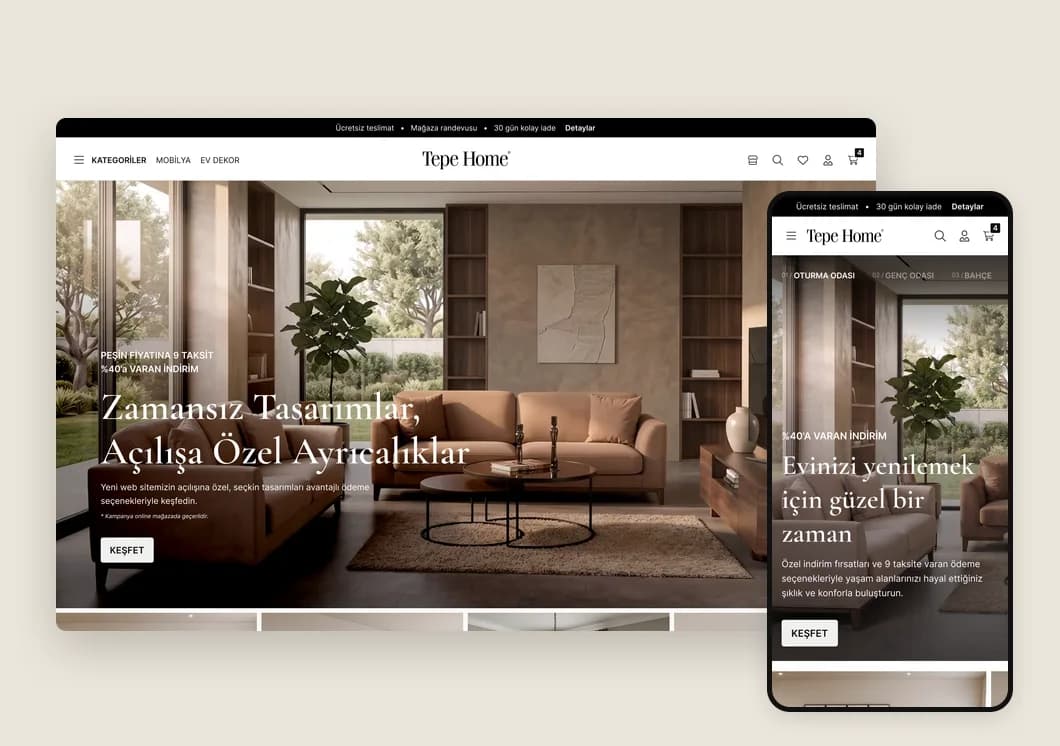
Tepe Home · Web
Tepe Home Website
A new website for a premium furniture brand that inspires and makes buying easier.
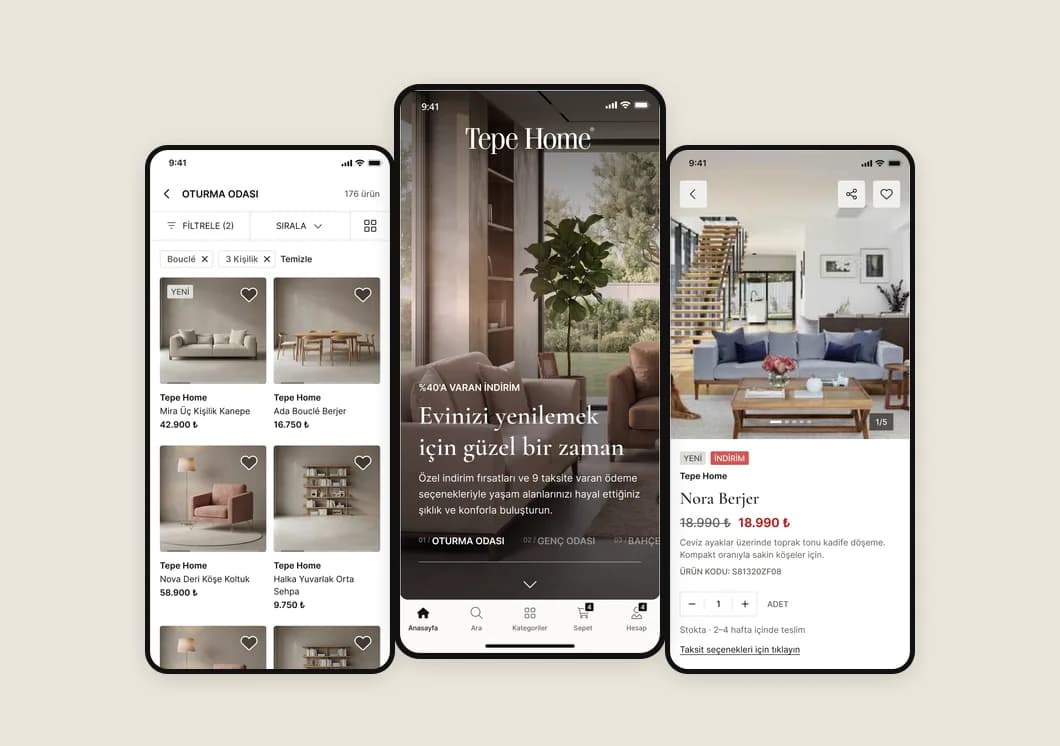
Tepe Home · Mobile
Tepe Home Mobile App
A complete shopping app for a premium furniture brand, from first launch to payment.
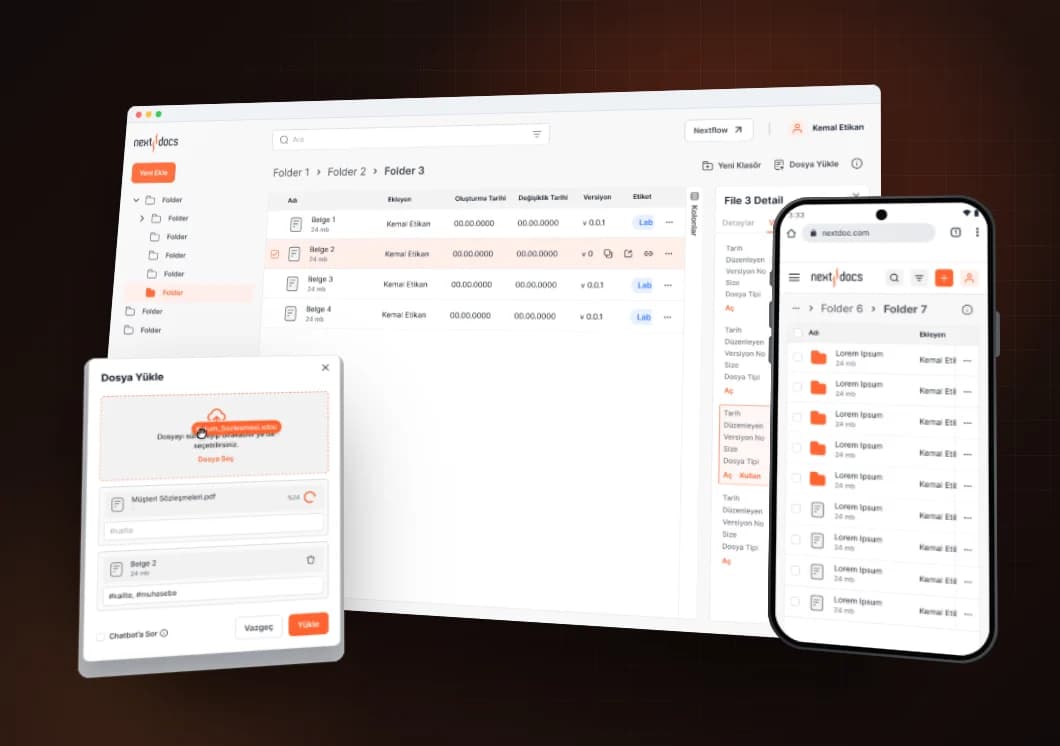
Eczacıbaşı Bilişim · Web
Next Docs
A document management system and UI kit for Eczacıbaşı Bilişim.
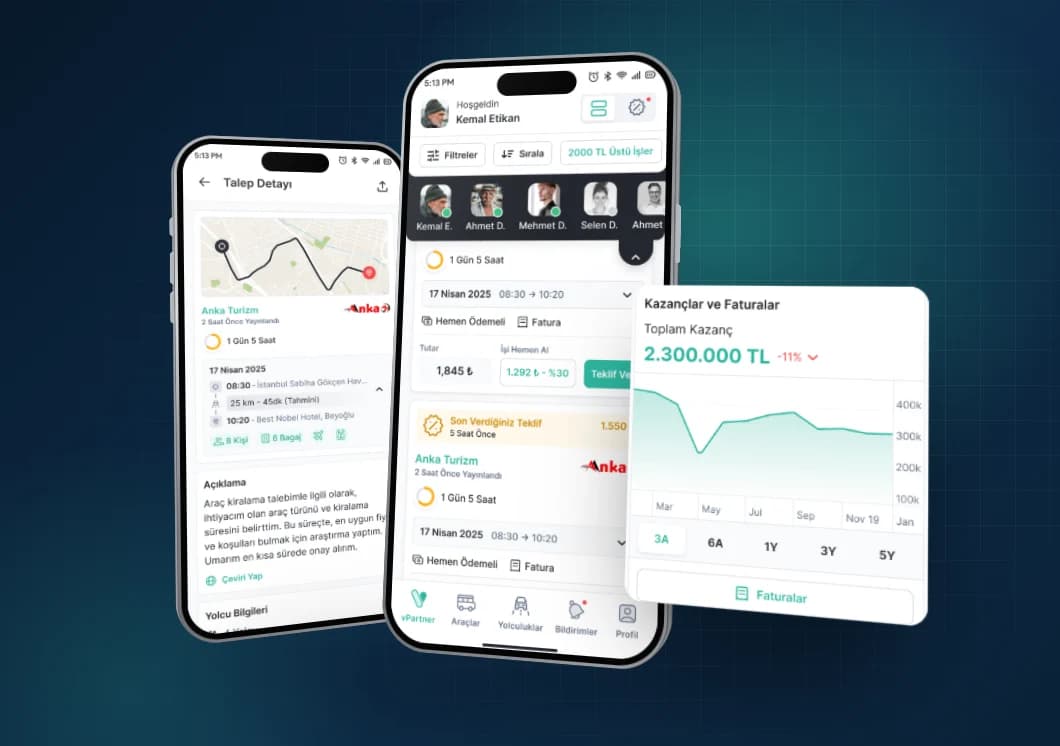
Vita Partner · Mobile
Vita Partner
A mobile app where transport suppliers manage their vehicles, drivers, trips and earnings.
FAQ
Do you write the code?
No, your team keeps writing the code. We set up the standards, rules and system and review changes. If you like, we can also build specific components or fixes ourselves.
Which tools do the teams you work with use?
We work with teams building with tools such as Cursor, Claude Code, GitHub Copilot, Lovable or v0. We write the design rules for the tool and code structure your team uses.
Is it a one-off or ongoing?
Either. We can start with a one-off audit and standardisation, then continue with regular support as the product grows.
How is this different from your design system service?
In a design system project we design and build the system from the start. Here the product is evolving quickly in your team's hands: we start from the existing code, set the standards, make sure your AI tools follow them and stay with you along the way. If the product needs a fuller system, we can move on to a design system project.
Will it slow our team down?
The point is to keep the speed. Once rules and components are clear, the team stops rethinking every screen, the AI tools produce more consistent screens from the start, and less time goes into fixes.
How are timeline and budget set?
In the first meeting we talk through your goals and where things stand. Then we agree on scope, deliverables, timeline and budget together.
Further reading
Design to Product or Straight to Product? Choosing the right path for your project
Every digital product starts with the same question: design everything first, or put a working version in front of users as soon as possible? Here is how we decide.
Why the interface drifts in vibe-coded products, and how to pull it back together
Shipping a product with AI coding tools has never been faster. But as speed goes up, the interface drifts. Here is why, and how to pull it back together without slowing your team down.